Knowing how to find, use, and cite the literature effectively and efficiently is a critical skill for all scientific writers. Citing the literature in your writing is not only an honest reflection of the literature on which your work is based, but is also important to reaching your audience and achieving your writing goals. Citing the literature allows your readers to
On this page, we’ll discuss how to use literature appropriately, including how to avoid plagiarism, whether and when to cite information, and how to paraphrase.
Scientists often use the ideas and findings of other scientists in our writing, but it is rare in scientific writing to use direct quotations from previously published work. When writers incorporate the ideas or findings of others in their writing, rather than quote, they paraphrase (and cite), taking great care to avoid any hint of plagiarism.
Some practices clearly constitute plagiarism, such as copy-pasting a paragraph of someone else’s work into your own without quotation marks and citation or (misrepresenting) someone else’s work as your own. More subtle, but serious, forms of plagiarism include stealing a single sentence, providing incorrect citation information, and changing a few words but otherwise copying someone else’s basic sentence structure. This latter form of “structural” plagiarism scales up, too; it is plagiarism to copy someone else’s basic organization and sequence of ideas within a group of sentences, a paragraph, or series of paragraphs, even if you cite the original source.
As suggested above, nearly all forms of plagiarism can be avoided by appropriate citing and/or paraphrasing. The scenario of structural plagiarism reveals, however, that even if you do cite a source, it is still not permissible to use someone else’s ideas to form the bulk of what is ostensibly your own work. Writers often run into the problem of structural plagiarism when they rely too heavily on a small number of sources. In these cases, they may end up essentially stealing the others’ intellectual work, instead of doing their own creative intellectual work of collecting, analyzing, synthesizing, organizing, and expressing information and ideas.
Because plagiarism is often unintentional, as you are finding and reviewing literature related to your own writing, we recommend adhering to the following best practices.
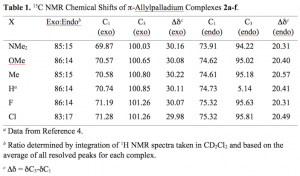
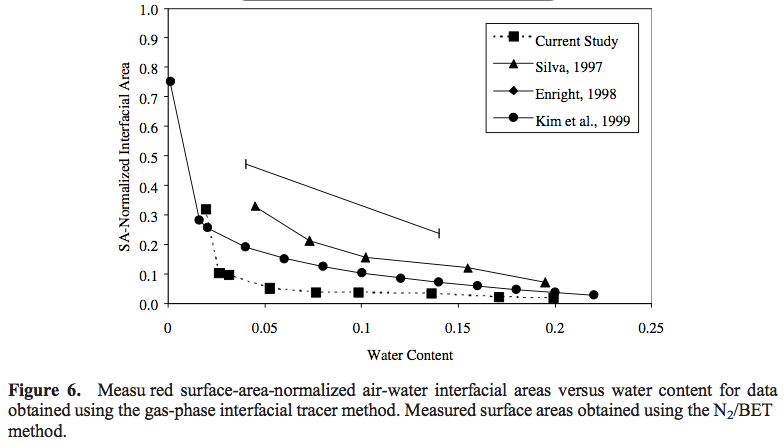
In scientific writing, direct quotations are rarely used. This means once you have found primary literature that you’d like to use in your writing, you will need to paraphrase the important findings or ideas (see Using Citations) for more on what is considered citable (and therefore “paraphrase-able” in scientific writing). Consider this example: Suppose an article you’ve found states “The activity of hexokinase was reduced ten-fold in the presence of equimolar concentrations of allose,” you would not quote and cite this. Instead, you would paraphrase and cite, something like this: “Hexokinase is inhibited by allose.1” You’ll note that the best practices exclude certain problematic practices. Finally, recall that changing only a few (typically non-critical) words from the original author’s text can still constitute plagiarism. Minor alterations to another’s statement, even with a citation, is still plagiarism. The structure of each sentence, the vocabulary, as well as the sequence of ideas expressed should be original to you. To help you begin recognizing appropriate and inappropriate paraphrasing (including plagiarism), let’s examine several attempts at paraphrasing findings from a journal article. Consider the following journal article passages. Can you paraphrase the information in each? Remember to change the wording and the structure of the passage, while capturing the essential science. Multiple appropriate solutions are possible, so do not worry if your answer does not match ours exactly. After trying it on your own, learn more by reading our solutions and additional notes. Although often used synonymously, citations and references aren’t the same thing. Citations are short in-text notations (often numbers or authors’ names and publication year) that let readers know which ideas are attributable to which external source(s). Citations themselves provide little or no bibliographic information, however; instead, they simply send readers elsewhere — to a list of references — for the full bibliographic information. References are usually listed as a stand-alone section at the end of a paper, and include more complete information for each source cited in the paper. We’ll examine whether, when, and how to cite in some detail, followed by a brief section on references. Beginning writers often ask “how many citations do I need?” Unfortunately, there’s not a simple answer to this question. Effective writers use as many sources and citations as are necessary for giving credit for their ideas and backing them up—and no more. That said, the number of works typically cited is related to the writing goals of a particular genre. For example, If multiple studies have contributed to a finding, you generally should cite all of the studies that were meaningfully involved. If many studies have published a given finding, however, you should consider whether the information is now considered to be common knowledge (in which case you wouldn’t cite it). If many studies have published a given finding, but it either isn’t considered common knowledge or you are not sure, there are two options for citing: “Since the end of the LIA, mountain glaciers are mainly retreating, and in several cases their present size is smaller than at any time in at least the last 5,000 years (e.g., Orombelli 2011; Thompson et al. 2013).” A source should be cited only for original findings it reports. In other words, you only cite a paper (or other document) when it is the primary source of the information being referenced in your paper. Collectively, papers that report original findings are referred to as primary literature, but not every section of a primary literature paper reports original findings and, therefore, not all information in the primary literature is citable. Original findings and other types of primary sources of information include: In contrast, scientists should not cite a paper for background information that was presented in the paper’s introduction. Doing so would essentially amount to a game of “operator” or to including “hearsay” in your paper – a case of “I’m telling you what she said that he found,” which is not acceptable in scientific writing. Instead of including hearsay and citing the messenger, you should always take the time to find, read, and (if appropriate) use/cite the paper/scientist(s) who originally reported the information. Consider the following example, in which Article A cites Article B and you want to include the information as support for your own conclusions: “Gold nanoparticles have unique optical properties, such as distinctive extinction bands in the visible region, due to surface plasmon oscillation of free electrons [Article B].” In your own paper, you should not cite Article A. Instead, find the original source of the finding (Article B) in order to verify the validity and context of those findings. If it all checks out and you still want to use the information as support for your conclusions, cite Article B. Afterall, it is the author(s) of Article B who deserve credit. Two additional implications of the rule that you only cite a source for its original findings is that “general knowledge sources” and “general knowledge” itself are not citable. General knowledge sources include most encyclopedias, websites, and textbooks. Such sources, after evaluating their reliability, can be useful starting points for preparing to engage with the primary literature, but are not sufficient for direct use. This is because they are often simplified for a more general audience rather than the more expert audience scientific writers are looking to reach, and also because they have typically not been peer-reviewed in the same manner as scientific sources. General knowledge, as an entity, is information that is so thoroughly established and well-studied that it is virtually impossible to attribute the finding to any one or small group of researchers. It is also the case that the information (e.g., a theory or finding) is supported by so much accumulated evidence that new evidence is unlikely to alter the scientific consensus. If is now considered to be an established fact (e.g., that the Earth orbits the Sun; that anthropogenic global warming is occurring), you probably don’t need to cite it. Sometimes, it can be hard to know whether information you are using is common knowledge. Indeed, what is considered common knowledge changes over time, making it a moving target. A good rule of thumb from the OWL at Purdue is that you can be confident that something is common knowledge if you can find the same information un-cited in at least five (reliable) scientific sources. Because there are no hard-and-fast rules for determining whether or not something is common knowledge, the best option remains: when in doubt, cite it. If you are uncertain whether the finding should be considered common knowledge, it is always safer to assume that it is not common knowledge and to cite the information. You’ve already learned what type of information (original findings!) is typically cited in scientific writing, as well as techniques for paraphrasing appropriately. Now you can extend these ideas in order to integrate multiple sources and/or multiple pieces of information into a single sentence or passage. Iintegrating related ideas or information (e.g., comparing, contrasting, generalizing, providing examples, etc.) from multiple authors can strengthen the science and your writing. Although citing multiple sources can, indeed, convey that the science is more established and reliable, the absolute number of citations is not the primary point we are trying to make here. Rather, it is the integration of scientific information that we are after. Let’s examine three passages that will help clarify this distinction and will help highlight some additional aspects of effective citing. Passages B and C excluded direct references to the scientists they were citing. And yet, scientific writers do sometimes “name names.” They do so sparingly and for specific intent – such as to clarify distinct schools of thought, to highlight a specific scientist/group who are the acknowledged leaders in a particular sub-field or whose detailed protocol you are following, or to insert a bit of variety to the sentence structure. For a routine finding or procedure, the authors are not typically named in the text. For example, consider the following passage: “The NMR spectrum has been confirmed by Biyuan et al. (2008)3 as consisting of a doublet of doublets.” In this case, the authors are citing supporting information for a rather routine finding (an NMR spectrum). There is no scientific reason to call out Biyuan et al. by name. This sentence would more typically be written as: “The NMR spectrum consists of a doublet of doublets.3” If, however, you followed someone else’s detailed protocol (i.e., not just a routine methodology) as in this next case, naming names might be appropriate: “Proteins were extracted according to the protocol of Raymond et al.13” It is not incidental that the word count of Passages A-C decreases (68 words to 27!) as we progress from the “fair” to “great” example. Conciseness is highly prized in scientific writing. We’ll introduce other techniques for writing concisely in Scientific Language. It is essential that you cite (within the text) and reference (in the bibliography) the scientific literature accurately and that you strictly adhere to an acceptable set of formatting conventions. There is no universally accepted convention for formatting citations or references in scientific writing, although many publishers require a specific style. Most important is that you keep your style consistent throughout your paper. Reference management software can simplify the formatting process and allow you to rapidly change from one style to another, as needed. Placement of citations. Because citations are used to give credit to someone else’s scientific contributions, the placement of citations should make clear to the reader which information is attributable to whom. This means that in scientific writing you cite after the first mention of ideas from that author. This also means that if only part of your statement refers to that scientist’s work, you can have a citation in the middle of a sentence (see Passage C above). A citation can also come at the end of the sentence to indicate the whole sentence is being attributed. In the case where consecutive sentences contain information from the same single (or set) or sources, students often ask if you need to include a (the same) citation for each and every sentence. The answer is “no, but be careful.” It can be clunky to cite and re-cite the same source in consecutive sentences, and yet, you want to be clear regarding the source of the information (see Avoiding Plagiarism). Scientific writers typically cite the first sentence and then use language (instead of a citation) in subsequent sentences to clarify that the same source is being used. For example, the bolded language in the following passage replaces a second citation to reference #4. “Copper has been shown to be a contaminant in over 30 major water supplies to the US.4 In the same study, zinc, lead, and aluminum were identified in the majority of water sources in the Northeast.” If using language to clarify the source of information is awkward or wordy, it is okay to repeat the citation. Remember, avoiding plagiarism and giving credit where it is due is your primary goal, so when it doubt, err on the side of “over-citing”. Citation styles. Author-date, superscripted number, and inline number are the three most common citation styles used in scientific writing. Here is an example passage using each of the three styles. Each format has advantages and disadvantages. You can see from the examples above, author-date citations add bulk to writing, which can diminish readability and potentially push authors over strict word limits; in contrast, listing authors and dates can be helpful for readers who can see at a glance (i.e., without referring to the bibliography at the end of the paper) which research groups are doing what and get a sense of the time frame and chronology of the science. Numerous style guides and online sources describe the basic mechanics of implementing these styles, so we will not repeat that information here. Here are just a couple of citation formatting tips that often stymy beginning scientific writers. Formatting citations in tables and figures. Because tables and figures often contain numerical data and/or are already a bit challenging to read, it can be difficult to cite within a graphic in a way that is clear to readers. There is no universally accepted method for citing information in graphics, but here are some useful guidelines: When discussing scientific graphics, visual examples may help: Example 1. An full column of data was taken from a single source, so a superscript letter was used in that column’s heading to refer readers to the table footnotes. Adapted from Armstrong et al. 2005, doi:10.1016/j.tetlet.2005.01.032 Example 2. As in Example 1, superscripted letters are used within the table to refer to table footnotes, but here they refer to individual data points instead of an entire row or column of data. From Costanza-Robinson and Brusseau 2002, doi:10.1029/2001WR000738. Example 3. Because multiple pieces of information were taken from each of several sources, citations to the original studies are provided in their own column within the table. From Costanza-Robinson and Brusseau 2002, doi:10.1029/2001WR000738. Example 1. Because the whole figure is reproduced from another paper, the reference is given at the end of the title. From Clark et al. 2009, doi:10.1126/science.1172873. Example 2. The reference is given at the end of the caption here. From Maxwell 2016, unpublished data. Example 3. Even though this image was not originally from a peer-reviewed work, its source is still cited in the caption. From McKee and Ostriker 2007, doi:10.1146/annurev.astro.45.051806.110602. Example 4. This graph includes original data and data from external sources. Here, the references refer to single data points within the chart itself. From Costanza-Robinson and Brusseau 2002, doi:10.1029/2001WR000738. Example 5. As in Example 4, some of these data are original and some are from external sources. Here, the cited data are referenced in the legend. From Costanza-Robinson and Brusseau 2002, doi:10.1029/2001WR000738. Example 6. As in Examples 4 & 5, some of these data are original findings of the authors & others are from external sources. To avoid busy-ness within the chart, citations are included in the figure caption. From Costanza-Robinson and Brusseau 2002, doi:10.1029/2001WR000738. Remember–there are multiple appropriate ways to cite information in a scientific graphic. Unless proscribed by a publisher, choose whichever one works best for your audience and purpose, as well as suits your personal style. References. References are usually located at the end of a document in a stand-alone section and contain complete bibliographic information for each source cited in the work. Other less common approaches also exist, including using footnotes for references, rather than a stand-alone section at the end, and particularly in scientific posters, a rather condensed reference style. Regardless of format, references must provide accurate and sufficient bibliographic information for readers to identify and find the primary source. If these two criteria are not met, you run the risk of plagiarizing. Because the various acceptable reference formats are thoroughly described by many online sources, we will not cover those details here. Less information is available online about referencing in scientific posters, however, so we’ll touch on that here. Recall that scientific posters typically contain relatively few citations and space is limited; this lessens the need for a stand-alone reference section or at least means you want your references to take up as little room as possible. Accordingly, a condensed reference style is often used. Poster Reference #2 utilizes the “doi” or digital object identifier, which is a unique identifier for publications and serves as a useful “one-stop-shop” for finding a publication. These condensed references can be inserted directly into the text without an accompanying reference section — essentially as a citation/reference combo. You may have noticed that the Write Like a Scientist website utilizes this approach. Alternatively, a conventional citation can be used (either superscripted or inline numbers) with this condensed reference style in a stand-alone reference section at the bottom of the poster. Although condensed references do not provide all the bibliographic information, they satisfy the critical criteria of providing accurate and sufficient information for the reader to find the original source. Regardless of the format you use, we recommend that you use a reference management tool, such as Zotero, to manage your citations and references. Reference management programs will automatically format (or reformat if your style needs change) your citations and references for you. For example, if you decide to delete a whole paragraph and its associated five citations, the software will automatically renumber the remaining citations and re-create an updated reference list. Learning reference management software may seem tedious at first, but using it to insert citations and build a reference list as you write will save you many hours of work and promote accurate citing and referencing. This completes our section on Using the Scientific Literature in your writing. Consider exploring the Organization section of the site next to learn about the broad and fine organization of your writing.Before you write, take steps to avoid unintentional plagiarism.
Paraphrasing Information & Ideas
Best practices for paraphrasing
Examples of (Good & Bad) Paraphrasing

Can you paraphrase appropriately?
Using Citations in Your Writing
How many citations do I need?
Which sources of information should I be citing?
Only cite a source for the original findings it reports and not for its cited sources. Finding the primary source takes time but ensures the scientific reliability and integrity of your work and gives credit to the appropriate scientist(s).What is considered general knowledge (and, therefore, not cited)?
Before you cite, consider whether it is common knowledge.
To decide whether a finding is common knowledge, ask yourself
How should I handle information from different sources?
Consider the following scenarios in which you find information and are considering using it in your writing. For each scenario, which approach(es) for handling that information would be appropriate?
How can I use citations most effectively?
Integrating multiple sources and/or closely related pieces of information makes unintentional plagiarism less likely, strengthens your scientific argument, captures more of your own intellectual effort and scientific thinking, and promotes conciseness (a hallmark of scientific writing).Effective Integration of Multiple Sources & Ideas

Formatting Citations & References
If you often find yourself needing to cite the same source in consecutive sentences, this is a pretty good sign that you are not using enough sources or that you could better distill only the most essential scientific information from a given source. See How Can I Use Citations Most Effectively for ideas on distilling the science and integrating information from multiple sources.Three Citation Styles Common in Scientific Writing

Avoiding Common Citation Pitfalls
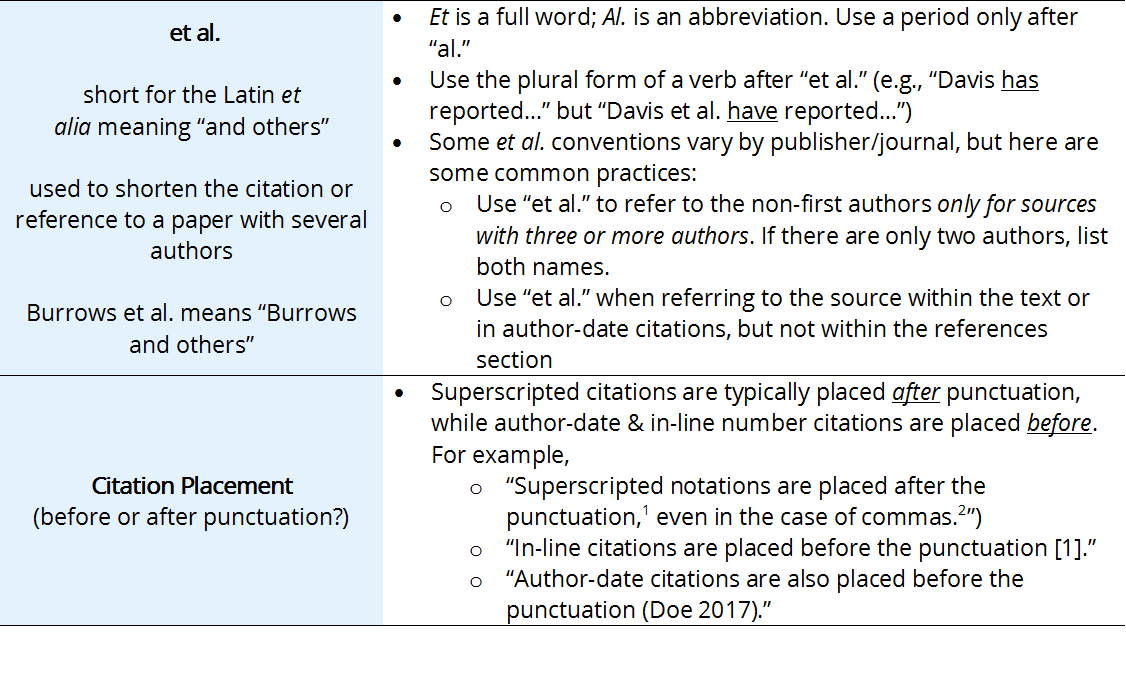
Placement and formatting of citations in scientific tables
Consider the tables below and ask yourself:


Placement and formatting of citations in figures
Consider the figures below and ask yourself:



Considerations for citing within scientific graphics
When trying to decide how you want to reference information in your own figure or table, ask yourself:
Can you pick out the better approach to citing within a scientific graphic?
Consider the two versions of each graphic provided. Of the two options, which one conveys more clearly the source of information in the graphic? Why?
Condensed Reference Styles for Posters


